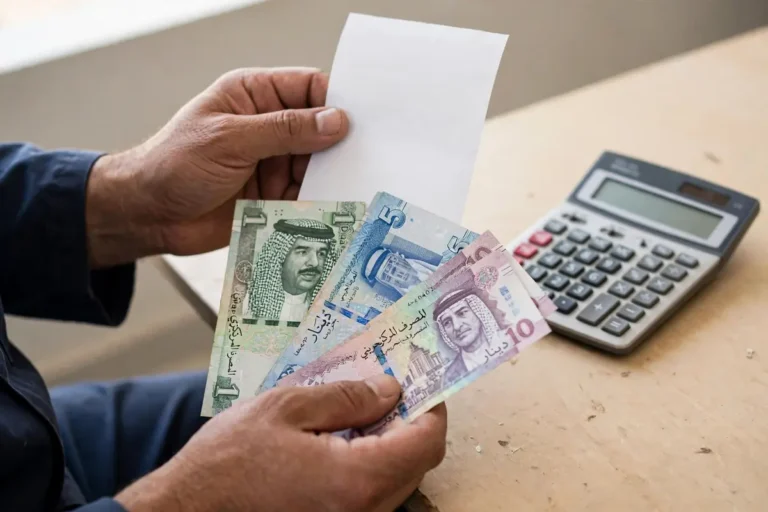
Average Salary in Bahrain (2026): What People Actually Earn
If you search for the average salary in Bahrain, you will get a single number — and it will probably mislead you. Bahrain does not have one labour market. It has two very different ones sitting side by side: Bahraini nationals, mostly in mid-level and senior roles, and a much larger expatriate workforce, most of whom are in lower-paid manual and service jobs. Any honest answer has to show both.
This guide does that. It starts with the official figures published by Bahrain’s Social Insurance Organization (SIO) for the second quarter of 2026, explains why the average and the median tell different stories, and then looks at pay by sector, by age and experience, and at the question people really ask: is my salary good for Bahrain?
Compare Your Salary to the Bahrain Average
Enter your gross monthly salary in Bahraini dinars (BHD). The tool compares it with the official SIO Q2 2026 benchmarks for your group. It stores nothing and sends nothing anywhere.
Honest label: Benchmarks are SIO Statistical Report 2026, Q2, insured wages — Bahraini: average BHD 936, median BHD 620; non-Bahraini: average BHD 269, median BHD 110. They describe insured wages, not necessarily your full package (allowances, housing or flights may sit outside the insured wage). This is a benchmark comparison, not a take-home pay calculation.
The Short Answer: There Is No Single Average Salary in Bahrain
According to the SIO Statistical Report for Q2 2026, the average monthly salary of Bahraini contributors was BHD 936, while the average for non-Bahraini contributors was BHD 269. Those two numbers describe different workforces, not two versions of the same job.
The gap is not a mistake in the data. Bahraini contributors numbered about 158,000 in Q2 2026, while non-Bahraini contributors numbered about 467,000 — roughly three expatriate contributors for every Bahraini one. Most expatriate contributors are in construction, domestic work, retail, hospitality and other lower-paid roles, which pulls the expatriate average down. Most Bahraini contributors are in government, banking, professional and supervisory roles, which pulls their average up.
So before you compare your own pay to “the average”, first ask: average for whom? A software developer comparing their salary to the expatriate average of BHD 269 would get a meaningless result, and a construction worker comparing theirs to the Bahraini average of BHD 936 would get an equally meaningless one. Use the benchmark that matches your group, your sector and your experience — the tables below let you do exactly that.
What the Official SIO Figures Show (Q2 2026)
The figures in this section come directly from the SIO Statistical Report 2026, Q2, which covers insured contributors registered with the SIO. One important caveat: these are insured wages as recorded by the SIO, not necessarily a worker’s full take-home package. Housing, transport and other allowances paid outside the insured wage may not be fully reflected, and SIO contributions themselves are capped at a monthly insurable wage of BHD 4,000. Treat the figures as the best official benchmark available — not as a promise of what any individual job pays.
| Group (Q2 2026) | Contributors | Average monthly salary | Median monthly salary |
|---|---|---|---|
| Bahraini — all sectors | 158,140 | BHD 936 | BHD 620 |
| Bahraini — public sector | 52,778 | BHD 968 | BHD 798 |
| Bahraini — private sector | 105,362 | BHD 919 | BHD 500 |
| Non-Bahraini — private sector | 466,680 | BHD 269 | BHD 110 |
Two patterns stand out immediately. First, Bahraini public-sector workers earn more on average than their private-sector counterparts (BHD 968 against BHD 919), and their median is far higher (BHD 798 against BHD 500) — public-sector Bahraini pay is more evenly spread, while private-sector Bahraini pay has a long lower tail of entry-level and junior roles.
Second, the gender split runs in opposite directions for the two groups. Among Bahraini contributors, men averaged BHD 1,014 and women BHD 831. Among non-Bahraini contributors, women averaged BHD 358 and men BHD 259 — a reversal that reflects the different jobs each group typically holds, with expatriate women concentrated in professional, nursing, teaching and office roles and expatriate men concentrated in construction and manual work. Do not read either gap as a simple “equal pay” figure: the SIO data does not compare men and women in the same job.
Why the Average and the Median Are So Far Apart
For Bahraini contributors, the average (BHD 936) is about 51% higher than the median (BHD 620). For non-Bahraini contributors, the gap is even wider: an average of BHD 269 against a median of just BHD 110.
The reason is the shape of the distribution. The median is the middle worker — half earn more, half earn less. The average is pulled up by high earners. When a small number of people earn BHD 3,000 or more and a very large number earn under BHD 200, the average sits well above what a typical worker takes home.
The distribution tables in the same SIO report make this concrete. Among non-Bahraini contributors, 70.9% earned under BHD 200 a month, 13.7% earned BHD 200–399, and only 4.6% earned BHD 1,000 or more. Among Bahraini contributors, the spread was much wider: 21.4% earned BHD 200–399, 23.7% earned BHD 400–599, 15.9% earned BHD 600–799, 10.8% earned BHD 800–999, and 26.7% earned BHD 1,000 or more.
Practical rule: if you want to know what a typical worker earns, look at the median. If you want to know the overall level of pay in the economy, look at the average. If a job advert or a salary guide quotes only “the average” without saying which group it covers, treat it with caution — and check it against the table above.
Bahraini vs Expat Pay: What Explains the Gap?
The BHD 936 versus BHD 269 gap is the single most misunderstood number in Bahrain’s salary debate. It is not, on its own, evidence that two people doing the same job are paid those two amounts. Four factors explain most of it:
1. Different jobs. Expatriate contributors dominate construction, cleaning, domestic work, security, retail and food service. Bahraini contributors are concentrated in government, banking, education, healthcare and management. Comparing the two averages is closer to comparing two different economies than two pay scales for one job.
2. Different seniority. Senior and managerial roles — which pay the most — are held disproportionately by Bahrainis, partly through Bahrainisation policies that give nationals preference in hiring. Expatriate professionals do exist at senior level and often earn well above the Bahraini average, but they are a minority of the expatriate workforce.
3. Different packages. Many expatriate contracts bundle accommodation, transport, flights or meals into the deal, sometimes instead of cash salary. A worker on BHD 150 cash plus free housing and transport is not in the same position as a worker on BHD 150 cash with rent to pay. Always compare the full package, not just the headline salary.
4. Different recorded wages. SIO figures record the insured wage. For some lower-paid roles, allowances and overtime sit outside that figure. The SIO benchmark is the most reliable official yardstick available, but it is not a complete picture of every worker’s total income.
The honest way to use these numbers is as a starting point for your own group. An expatriate teacher, nurse or engineer should benchmark against professional expatriate pay in their sector (see below), not against the BHD 269 all-expatriate average. A Bahraini graduate should benchmark against the BHD 400–599 band where many early-career Bahrainis sit, not against the BHD 936 overall average.
Average Salary in Bahrain by Sector (Indicative Ranges)
The SIO report does not break pay down by sector, so the ranges below are indicative market ranges reported across 2026 salary guides — estimates, not official statistics. They describe typical gross monthly pay for skilled and professional roles, before allowances, and they vary widely with employer, experience and qualifications. Use them to sense-check an offer, not as a guaranteed rate.
| Sector | Typical monthly range (BHD) | Notes |
|---|---|---|
| Oil, gas and energy (skilled roles) | 2,500 – 6,000 | Highest-paid skilled sector; senior specialists higher |
| Banking and financial services | 1,000 – 4,000 | Wide range: junior analysts at the lower end, senior managers above it |
| Information technology and cybersecurity | 1,200 – 3,000 | Cybersecurity and senior developers toward the top |
| Healthcare (clinical staff) | 800 – 3,500 | Nurses and pharmacists lower; specialist doctors far higher |
| Engineering and construction | 700 – 2,500 | Graduate engineers lower; project and senior engineers higher |
| Retail and customer service | 250 – 800 | Shop and service roles; supervisors toward the top |
| Hospitality and food service | 200 – 600 | Front-line roles; hotel managers well above this range |
Two cautions apply to every row. First, the same job title can pay double at a multinational or a five-star hotel compared with a small local firm — employer size matters as much as sector. Second, allowances change the picture: housing allowances commonly reported in the BHD 80–400 range, plus annual flights and health insurance for many expatriate contracts, can add a large share to total compensation. Ask any employer whether the quoted figure is basic salary only or the full package, and get the breakdown in writing.
For role-specific benchmarks, see our guides to teacher pay, software engineer pay, waiter pay and domestic helper pay in Bahrain.
How Pay Rises With Age and Experience
The SIO report also breaks Bahraini and non-Bahraini average pay down by age group, and the pattern is the same in both: pay rises steeply with age (and, by proxy, experience) and keeps rising into the fifties and beyond.
| Age group | Bahraini average (BHD/month) | Non-Bahraini average (BHD/month) |
|---|---|---|
| Under 20 | 354 | 71 |
| 20–29 | 560 | 123 |
| 30–39 | 851 | 237 |
| 40–49 | 1,302 | 325 |
| 50–59 | 1,491 | 474 |
| 60 and over | 1,690 | 639 |
For a young worker, this table is genuinely encouraging: a Bahraini in their twenties averaging BHD 560 is not “behind” — they are exactly where the official data says most people their age are. The jump between the twenties and forties is where careers are made, through promotion, specialisation and, in professional roles, recognised qualifications. If your pay has stalled while your age group has moved on, that is a clearer signal than any comparison with the overall average.
What Counts as a Good Salary in Bahrain?
This is the question behind almost every “average salary” search, and it has no single answer — it depends on household size, whether housing is included, and where you live. The real questions people ask online make the point: a family asking whether BHD 700 a month can support a wife and daughter, a worker asking whether BHD 350 with accommodation is enough to survive on, and a single person asking whether BHD 800 is comfortable. The answers differ because the households differ.
As a rough, practical guide — not an official standard — consider these bands against typical living costs in Bahrain:
Single person, accommodation included: BHD 400–600 a month can cover a modest but workable life, especially if transport and meals are partly provided. Below BHD 300, saving anything becomes very difficult.
Single person, paying your own rent: BHD 800 and above is the level many residents describe as comfortable, because rent alone can take BHD 150–300 for a room or small flat outside central Manama. This is why the same salary feels generous with housing included and tight without it.
Couple or small family: a household income around BHD 850–1,200 gives much more breathing room than a single income of BHD 600–700, particularly once school costs enter the picture. Families on a single income near the expatriate professional range need to budget school fees separately — they are often the largest single expense after rent.
Senior professional: BHD 2,000–3,000-plus, usually with housing, flights, insurance and sometimes school support, is the range in which most expatriate professionals describe themselves as comfortable and able to save substantially.
Two facts change how far any of these figures go. Bahrain levies no personal income tax, so gross pay is much closer to take-home pay than in most countries — though SIO deductions still apply (see below). And the Bahraini dinar is a high-value currency (about USD 2.65 to BHD 1), so a salary that looks small in dinars converts to a much larger figure in dollars or rupees. Judge a Bahrain salary by what it buys in Bahrain, not by converting it and comparing it with pay back home.
For a detailed household-by-household breakdown, see our guide to the cost of living in Bahrain.
Gross Salary vs Take-Home Pay
An average salary figure is usually quoted gross — before deductions. What lands in your bank account is different, and the difference depends on whether you are Bahraini or expatriate.
Bahraini employees contribute to SIO social insurance and unemployment insurance, and their employers contribute a larger share on top. Expatriate employees contribute a smaller SIO amount (mainly unemployment insurance), while their employers pay work-injury cover and, since March 2024, monthly end-of-service contributions instead of a single lump sum at departure. SIO contributions are capped at a monthly insurable wage of BHD 4,000, so very high salaries do not attract proportionally higher SIO deductions.
Because there is no personal income tax, the gap between gross and net in Bahrain is far smaller than in most countries — but it is not zero. Before accepting an offer, run the actual numbers: check whether the quoted salary is basic only or includes allowances, what SIO will be deducted, and what end-of-service or leave entitlements apply. Our Bahrain Salary Calculator converts a gross salary into an estimated net figure after SIO, and our guides to end-of-service benefits and leave salary explain the two entitlements most often overlooked in an offer.
How to Use the Average in a Salary Negotiation
An average is a tool, not an argument. Used well, it strengthens your case; quoted blindly, it weakens it. Here is how to use the benchmarks in this guide:
Benchmark your group, not the whole country. Cite the SIO average and median for your group (Bahraini or non-Bahraini), your age band and your sector range. “The SIO average for Bahrainis in their thirties is BHD 851” is a credible anchor. “The average salary in Bahrain is BHD 936, so I should earn that” is not — it ignores sector, experience and package.
Compare the full package. Housing, transport, flights, insurance, school support, bonuses and leave all have cash value. A BHD 1,000 salary with no benefits can be worth less than a BHD 850 salary with housing and flights. Put both offers into monthly cash terms before comparing.
Ask what is insured. Because SIO benefits and end-of-service calculations are based on the insured wage, a contract that quotes a high headline figure but insures only a small basic salary can cost you later. Ask for the basic salary, the allowances and the insured wage separately.
Check the payslip, not just the offer. Once you start, your salary slip shows the real breakdown — basic, allowances, deductions and net. Our guide to the Bahrain salary slip explains every line, so you can spot a missing allowance or a wrong deduction in your first month rather than your sixth.
Frequently Asked Questions
What is the average salary in Bahrain per month in 2026?
There is no single figure. In Q2 2026, the SIO reported an average monthly salary of BHD 936 for Bahraini contributors (median BHD 620) and BHD 269 for non-Bahraini contributors (median BHD 110). For professional and skilled roles, typical market ranges run far higher — roughly BHD 1,000–4,000 in banking and IT, for example.
What is the median salary in Bahrain?
For Bahraini contributors in Q2 2026, the median was BHD 620 a month; for non-Bahraini contributors it was BHD 110. The median is often the better guide to what a typical worker earns, because the average is pulled up by high earners.
Is BHD 1,000 a good salary in Bahrain?
For a single person, yes — it sits above the Bahraini average and well above both medians, and with no income tax it goes further than the same figure would elsewhere. For a family paying rent and school fees from a single income, BHD 1,000 is workable but tight, and the package around it (housing, insurance, school support) matters as much as the salary itself.
Why is the expatriate average so much lower than the Bahraini average?
Because the two workforces do different jobs. About 71% of non-Bahraini contributors earned under BHD 200 a month in Q2 2026, concentrated in construction, domestic work and service roles, while Bahraini contributors are concentrated in government, banking and professional roles. Expatriate professionals earn far above the BHD 269 average.
Do Bahrain salaries include housing?
Sometimes. Many expatriate packages include a housing allowance or company accommodation, while many local contracts quote cash salary only and leave rent to the employee. Always ask whether a quoted figure is basic salary, salary plus allowances, or the full package — and get the breakdown in writing.
Sources and verification: SIO figures in this post are from the Social Insurance Organization’s Statistical Report 2026, Q2, published on sio.gov.bh. Sector ranges are indicative market estimates from 2026 salary guides, not official statistics, and are labelled as such. Figures are in Bahraini dinars (BHD) per month unless stated otherwise. This site is an independent guide and is not an official government website. To verify SIO statistics, visit sio.gov.bh.
About the Author
Muhammad Ahmad is an independent publisher who researches and writes Bahrain salary guides. Figures are researched from official sources including the Social Insurance Organization (SIO) and the Labour Market Regulatory Authority (LMRA) and are reviewed for 2026 rates. This site is not affiliated with the SIO or the Government of Bahrain, and all figures are estimates — confirm your exact figures with your employer or the SIO.