Domestic Helper Salary in Bahrain (2026): What Housemaids Actually Earn
If you are hiring a domestic helper in Bahrain — or you are a helper comparing offers — the first question is always the same: what is a fair monthly salary? The honest answer is that there is no single official rate. Bahrain has no statutory minimum wage for private-sector or domestic workers, so a helper’s pay is set by the written contract, by the wage floors that some home countries require for their workers abroad, and by what the market will bear. This guide brings those pieces together: the pay ranges reported for 2026, what drives the differences, what a family actually spends on top of the salary, and what the contract should guarantee. Bahrain has no statutory minimum wage in Bahrain for private-sector or domestic workers, so a helper’s pay is set by the contract rather than by law.
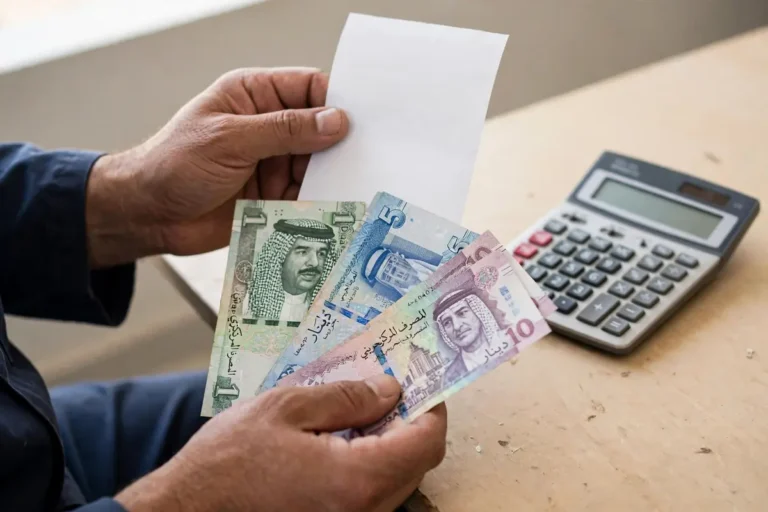
The short answer: a live-in housemaid in Bahrain typically earns BHD 100–150 per month (roughly USD 265–400), with specialist roles such as nannies, cooks and drivers earning more. Filipino helpers, whose home government enforces a USD 400 monthly minimum for overseas domestic workers, sit at the top of the range at around BHD 150 per month. Read on for the breakdown by role and nationality, and for the costs and contract terms that matter just as much as the headline wage.
Domestic Helper Pay Converter
Enter a monthly salary to see the yearly total and the approximate hourly equivalent. The hourly figure is an estimate — it depends on the actual hours worked, so enter the real weekly hours from the contract.
Formula: yearly = monthly × 12; weekly = yearly ÷ 52; hourly = yearly ÷ (weekly hours × 52). No data is collected or sent anywhere — the calculation runs entirely in your browser.
How Much Does a Domestic Helper Earn in Bahrain?
The most widely reported figure for 2026 is BHD 100–150 per month for a general live-in housemaid. That range appears consistently across 2026 hiring guides and job listings. It is a market range, not an official rate — and it already tells you something important: two helpers doing similar work in Bahrain can legitimately be paid quite different amounts, depending on their role, experience and nationality. Compared with the average salary in Bahrain across all jobs, domestic-helper pay sits at the lower end — which is exactly why the contract terms and the free accommodation matter so much.
One reason for the spread is that several sending countries set their own minimum pay for workers they place abroad. The Philippines is the clearest example: the Philippine government requires a minimum of USD 400 per month (about BHD 150) for its domestic workers overseas, and in September 2025 it confirmed that this USD 400 floor still applies in the Gulf after exempting GCC states from a higher USD 500 floor announced that year. News reports from Bahrain in 2026 confirm that USD 400 remains the standard for Filipino domestic workers there, and that any move to USD 500 is voluntary — agreed between the employer and the worker, not imposed. Other nationalities do not have the same floor, which is why their reported ranges start lower.
Domestic Helper Salary in Bahrain by Role
Pay rises with specialisation. A helper who only does general housework earns the least; one who cooks full meals, looks after children, cares for an elderly family member, or drives, earns more, because those skills are harder to replace. The table below summarises the ranges reported for Bahrain in 2026.
| Role | Typical monthly pay (BHD) | What usually lifts pay |
|---|---|---|
| Housemaid (general housework) | 100–150 | Gulf experience, good references |
| Nanny / childcare worker | 120–200 | Childcare experience, first-aid knowledge, English or Arabic |
| Household cook | 150–250 | Range of cuisines, meal planning, kitchen hygiene |
| Elderly caregiver | 150–250 | Caregiving or nursing-assistant training, patience and reliability |
| Private household driver | 180–300 | Valid Bahraini driving licence, clean driving record |
These ranges come from 2026 hiring guides and job listings, not from an official pay scale, so treat them as a negotiating benchmark rather than a promise. A newly arrived helper with no Gulf experience should expect the lower end; a helper with several years of verifiable experience in Bahraini or Gulf households, strong references and extra skills can reasonably ask for the upper end. Note also that one source reporting higher figures (up to BHD 250 for a housemaid) appears to describe experienced or specialist placements rather than the standard starting rate — another reason to confirm the exact wage in writing before accepting or offering a job.
Why Nationality Affects the Salary
It is uncomfortable but true: in Bahrain's domestic-work market, a helper's nationality is one of the strongest predictors of pay. This is not a rule set by Bahrain — it follows from the different minimum wages and placement rules of the workers' home countries, and from employers' preferences for language skills and prior training.
Reported 2026 ranges by nationality for a housemaid include roughly BHD 150 per month for Filipino workers (the USD 400 floor), BHD 70–110 for Indian workers, BHD 80–120 for Indonesian workers already in Bahrain, and BHD 60–90 for Ethiopian workers already in Bahrain. Sri Lankan and Nepali housemaids are reported around BHD 70–110, and Kenyan and Ugandan housemaids around BHD 55–90. These are market observations from 2026 guides, and they vary by agency and by the individual worker's experience — they are not official rates, and no worker should be paid less than the wage written in their own contract.
For families, the practical point is this: if you want a Filipino helper, budget around BHD 150 per month as the floor, not as a negotiable extra. For workers, the point is equally practical: your home country's floor is a protection, not a ceiling — experience, language skills and specialist duties are legitimate grounds to negotiate above it.
What the Salary Does — and Does Not — Include
A domestic helper's salary in Bahrain is only part of the package, and this matters for both sides of the bargain. A live-in helper normally receives free accommodation in the employer's home, food, and medical care from the employer, plus a return flight home at the end of the contract, as set out in the contract. That is why a BHD 120 monthly wage can go much further than the same cash amount would for a worker renting their own room and buying their own food: the helper's main living costs are covered, so a large share of the wage can be sent home.
For families, the flip side is that the salary is not the whole cost of hiring. Recruiting a helper from abroad typically costs around BHD 800–1,500 one-off in agency, visa, medical and travel costs, on top of the monthly wage. Permit-related fees also apply and differ sharply by employer type: guides for 2026 report roughly BHD 86 for a one-year permit for a Bahraini or GCC employer, but around BHD 586 for a one-year permit for an expatriate employer, including a refundable BHD 500 guarantee. Always ask the recruitment office for the all-in price in writing before committing.
LMRA, the Standard Contract and the Flexi-Permit
Domestic workers in Bahrain are hired through the Labour Market Regulatory Authority (LMRA), which regulates work permits, and recruitment runs through LMRA-licensed offices. Since 1 October 2017, agencies have been required to use a standard tripartite contract covering the employer, the recruitment office and the worker, declaring the nature of the job, the wage, working and rest hours, and weekly days off. Before accepting any job, a helper should read that contract — in a language they understand — and keep a copy. The wage in the contract is the wage that counts.
One point causes frequent confusion: the flexi-permit. Bahrain's flexible work permit, introduced in 2017, let eligible workers without a sponsor work for several employers at once. LMRA stopped issuing flexi-permits on 31 October 2022, and no new permits are available. Hiring a domestic worker now means standard sponsorship through a single employer under an LMRA work permit. If anyone offers you a "new flexi-permit" for domestic work in Bahrain, treat that offer with suspicion and check it with LMRA first.
Domestic workers sit partly outside Bahrain's main private-sector labour law (Law No. 36 of 2012): the law's general provisions do not all apply to domestic workers, though the government has stated that protections covering the labour contract, wage protection, annual leave, working hours, rest periods, end-of-service indemnity and exemption from litigation fees do apply to them, and the LMRA standard contract sets out employer duties including decent accommodation, food, medical care and privacy. Because the legal picture is mixed, the written contract is the worker's most important protection — vague verbal promises about hours, days off or pay are worth very little if a dispute arises.
Working Conditions: What to Agree Before Day One
Pay is only one term of a domestic-work job, and the terms that cause the most unhappiness are usually about time, not money. Before the contract is signed, both sides should agree in writing on:
- Working hours and rest: the daily hours, the weekly rest day, and what happens if the helper works on that rest day.
- Days off and leave: how the weekly day off works in practice, and the annual leave entitlement.
- Payday and proof of payment: the wage is due monthly; the helper should be paid on time and keep a record of every payment. Bahrain's Wage Protection System covers private-sector employers, and for domestic workers LMRA states that salary is transferred through approved banks or registered payment providers — keep bank records rather than relying on cash with no receipt.
- Passport: the helper keeps their own passport. An employer or agency holding a worker's passport is a red flag.
- End-of-service benefits: what is payable when the contract ends, and how it is calculated — this depends on the contract and the applicable rules, so get it written down at the start, not at the end. The end-of-service benefits in Bahrain payable when a helper's contract ends should be agreed in writing at the start, not negotiated at the end.
- Recruitment fees: a worker should never pay recruitment fees to get the job. Fees charged to workers are a warning sign of an unscrupulous agent.
If a dispute arises, it can be raised with LMRA. Keeping the contract, pay records and any messages about wages makes any complaint far easier to prove.
How Far Does a Helper's Salary Go? Pay vs. Cost of Living
For a live-in helper, the usual cost-of-living comparison works differently than for other workers: food and housing are provided, so the salary is largely disposable income. A helper earning BHD 120 per month and sending most of it home sends about BHD 1,440 per year; at BHD 150 per month, that is BHD 1,800 per year. Bahrain also levies no personal income tax, so the agreed wage is the amount received, before any personal spending on phone credit, toiletries, transport on days off, or remittance fees. Because food and housing are normally provided, a helper's cash wage stretches further than the headline cost of living in Bahrain might suggest.
For families weighing whether they can afford a helper, the honest monthly comparison is the salary plus the spread-out one-off costs. A BHD 120 salary with roughly BHD 800–1,500 of first-year setup costs works out at roughly BHD 187–245 per month across the first year, before food, medical care and the return flight. That is the figure to budget against — not the salary alone.
Use the converter at the top of this post to turn any monthly helper salary into its yearly total and an hourly equivalent, so offers can be compared like-for-like. If you want to check what a salary leaves in hand after deductions, use the Bahrain Salary Calculator to run the numbers for any monthly wage.
Negotiating a Fair Salary: Tips for Helpers and Families
For helpers: know your home country's floor before you negotiate, and do not accept less than it. Bring references from previous employers, be specific about skills that raise your value — cooking, childcare, elderly care, driving, English or Arabic — and get every promise into the written contract. If an offer looks generous but the hours, rest day or leave are vague, the offer is not generous yet.
For families: paying at or above the going range, on time, through a traceable channel, is the cheapest retention strategy there is. Replacing a helper costs hundreds of dinars in fresh recruitment fees and weeks of disruption; a fair wage agreed honestly at the start is what keeps a good helper for a full contract and beyond.
Domestic work is skilled, demanding work that keeps a household running — cooking, cleaning, childcare and care for elderly relatives are real skills, and the pay conversation should reflect that. A clear contract, a fair wage paid on time, and a weekly rest day that is actually taken are the basics of a decent arrangement for both sides.
Frequently Asked Questions
What is the average domestic helper salary in Bahrain?
For a live-in housemaid, the typical reported range in 2026 is BHD 100–150 per month, with Filipino helpers at around BHD 150 (the USD 400 home-country floor) and other nationalities lower. Specialist roles — nannies, cooks, caregivers and drivers — earn more, roughly BHD 120–300 depending on the role.
Is there a minimum wage for domestic helpers in Bahrain?
Bahrain has no statutory minimum wage for private-sector or domestic workers. In practice, minimums come from sending countries' rules — most notably the Philippines' USD 400 monthly floor — and from the wage written into the LMRA standard contract. Always check the contract figure, not a rumour.
Is the flexi-permit still available in Bahrain?
No. LMRA stopped issuing flexi-permits on 31 October 2022. Domestic workers are now hired under standard sponsorship through a single employer with an LMRA work permit.
Does a domestic helper's salary include food and housing?
For live-in helpers, accommodation and food are normally provided by the employer on top of the cash wage, along with medical care, as set out in the contract. That is why the cash wage goes further than it would for a worker paying rent and buying food.
How much does it cost a family to hire a domestic helper in Bahrain?
Beyond the monthly salary of roughly BHD 100–150, families typically face around BHD 800–1,500 in one-off recruitment, visa, medical and travel costs for a hire from abroad, plus permit fees that are much higher for expatriate employers than for Bahraini or GCC employers. Get the all-in price in writing from the recruitment office.
Verify permit and contract rules with the Labour Market Regulatory Authority (LMRA) at lmra.bh before signing anything. This site is an independent information site, not an official government site.
About the Author
Muhammad Ahmad is an independent publisher who researches and writes Bahrain salary guides. Figures are researched from official sources including the Social Insurance Organization (SIO) and the Labour Market Regulatory Authority (LMRA) and are reviewed for 2026 rates. This site is not affiliated with the SIO or the Government of Bahrain, and all figures are estimates — confirm your exact figures with your employer or the SIO.