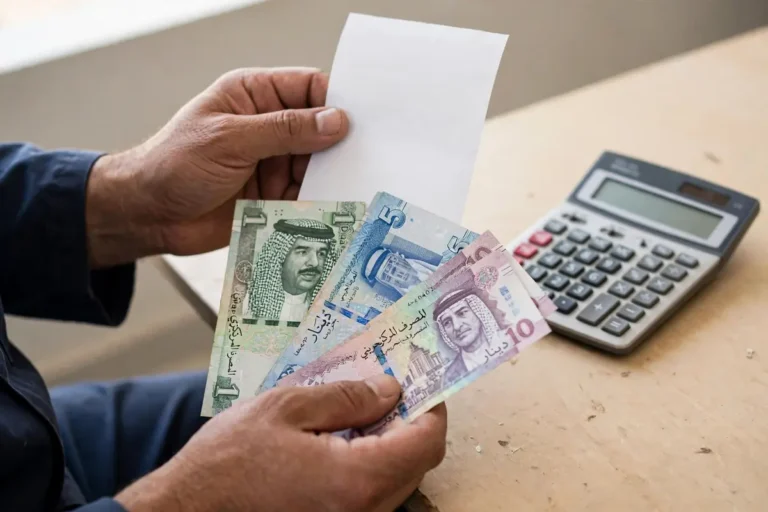
Waiter Salary in Bahrain: What Waiters Actually Earn in 2026
A waiter job in Bahrain is often advertised with a single monthly figure — BHD 160, BHD 200, or BHD 260 — and very little else. That figure alone tells you almost nothing about what you will actually take home. Two waiters on the same headline salary can end up in very different positions, depending on whether accommodation and meals are included, whether tips and service charge reach the staff, and how many hours the shift really lasts.
This guide puts the numbers in context: the base-pay ranges that appear again and again in current job adverts and salary surveys, what tips and service charge are actually worth, the working-hours rules that apply, and whether a waiter’s pay covers the cost of living in Bahrain. All salary figures are given as ranges with their sources, because no single “average waiter salary” describes every restaurant, hotel, and café in the country.
Waiter pay converter
Turn a monthly waiter salary in Bahrain into its yearly, weekly, and hourly equivalents.
Simple arithmetic only: this converter does not include tips, service-charge shares, overtime, allowances, or social insurance deductions.
How Much Do Waiters Earn in Bahrain Per Month?
Most advertised waiter jobs in Bahrain in 2026 fall in a base-pay range of roughly BHD 120 to BHD 350 per month. Within that wide band, the bulk of ordinary restaurant and hotel roles cluster much more tightly, at around BHD 150 to BHD 260 per month before tips, service-charge shares, and overtime. Waiter pay sits well below the average salary in Bahrain overall, which is pulled up by professional and managerial roles — so compare waiter offers against other waiter offers, not against the national average.
The evidence for that cluster is consistent across independent sources:
- GulfTalent data, summarised from 15 registered waiters in Bahrain, puts the average waiter salary at BHD 200 per month, with a lowest figure of BHD 150 and a highest of BHD 350.
- Indeed's Bahrain-area estimate for a waiter is BHD 201 per month, which sits almost exactly on the GulfTalent average.
- A live five-star hotel vacancy in Amwaj Islands, Bahrain, advertised on Bayt in 2026, offered up to BHD 260 per month all-inclusive, plus accommodation, a duty meal, and a free uniform.
- A Marriott Executive Apartments waiter/waitress listing in Manama, shown on WhatJobs, advertised BHD 200 to BHD 400 per month.
- A Sri Lanka-based recruiter's live Bahrain restaurant-chain vacancy offered BHD 160 plus BHD 30, with free accommodation, transport, a discounted duty meal, and medical cover.
At the bottom end, small cafés, food courts, and mall restaurants advertise around BHD 120 to BHD 200, sometimes with accommodation included and sometimes without. At the top end, luxury hotels and fine-dining restaurants advertise BHD 300 to BHD 400, and a small number of experienced, five-star roles advertised to candidates with several years' experience go higher still — one Manama five-star listing quoted USD 1,300 per month (roughly BHD 490) plus accommodation, meals, ticket, and insurance, but that is an experienced-role figure, not a typical waiter's wage, and it should not be used as a planning number for a first job.
One survey result needs a warning flag. Paylab's Bahrain waiter survey reports that 80% of waiters earn between BHD 349 and BHD 852 gross per month. That is far above every live vacancy and every other salary source found for this post, and it is likely to reflect a small, self-selected sample, senior or all-inclusive packages, or both. It is recorded in the sources file for transparency, but it is not used as the headline range in this article, because using it would overstate what a newly hired waiter can expect.
Waiter Pay by Workplace: Hotels, Restaurants, and Cafés
Where you work matters at least as much as the job title. The table below summarises the pattern that emerges from current adverts and hospitality guides. These are base-pay ranges before tips and service charge, not guaranteed take-home pay.
| Workplace | Typical monthly base pay (BHD) | What usually comes with it |
|---|---|---|
| Small restaurant, café, or food court | 120 – 200 | Often accommodation; meals and transport vary widely |
| Mid-range restaurant or hotel all-day dining | 160 – 260 | Often accommodation, duty meal, uniform, medical cover |
| Luxury / five-star hotel or fine dining | 200 – 400 | Usually accommodation, duty meals, transport, ticket, insurance; service-charge share more likely |
| Experienced / senior waiter, five-star | 300 – 490 | Full package; requires several years' experience — not a starter rate |
The practical lesson is to compare packages, not headline salaries. A BHD 160 offer with free accommodation, transport, and duty meals can leave more money in your pocket than a BHD 220 offer where you pay your own rent, food, and bus fares. Ask for the full package in writing before you accept: basic salary, accommodation (or allowance), meals, transport, medical cover, annual ticket, and exactly how tips and service charge are handled.
Tips and Service Charge: The Part of the Pay That Varies Most
For many waiters, tips and service charge are the difference between a tight month and a workable one — and they are also the least predictable part of the pay.
Service charge is not the same as a tip
A service charge is a percentage added to the customer's bill by the restaurant. In Bahrain it is commonly around 10%, and some guides report 15% in higher-end restaurants, on top of a separate government levy. A tip is an extra amount the customer chooses to leave for the waiting staff. The crucial point is that a service charge on the bill does not automatically mean money in the waiter's pocket: whether any of it is shared with staff, and in what proportion, depends on the employer's policy, and policies differ from hotel to hotel and restaurant to restaurant.
What waiters actually report
In an Expat.com Bahrain forum discussion on tipping, people who knew restaurant staff in Bahrain reported that the service charge "rarely goes to the waiters," and that a direct tip left for the waiter was the money staff could actually rely on. Typical direct tips mentioned in that discussion were around BHD 0.500 for a bill under BHD 10, rising to BHD 1 to BHD 5 for larger bills, depending on the service. That is anecdotal, not a survey, but it matches the advice repeated across hospitality guides: never assume the service charge is your income — ask how it is distributed, and in writing if possible.
A realistic way to think about extra income
One hospitality jobs guide breaks a waiter's possible extra earnings into illustrative monthly components: overtime roughly BHD 20 to BHD 80, service-charge distribution roughly BHD 15 to BHD 70, tips roughly BHD 10 to BHD 100, and performance bonuses roughly BHD 10 to BHD 50 — giving a total potential monthly figure of roughly BHD 195 to BHD 550 or more when added to a BHD 140 to BHD 250 basic salary. Treat those as illustrative estimates, not guarantees: a waiter in a busy tourist-area hotel restaurant in peak season may reach the upper end, while a waiter in a quiet neighbourhood café may see little or nothing beyond basic pay in a slow month. Tips depend on the venue, the season, the shift, and the clientele, and they should never be counted as fixed salary when you judge whether an offer is enough to live on.
Working Hours, Overtime, and Leave
Bahrain's private-sector labour law (Law No. 36 of 2012) sets a standard working week of up to 48 hours — normally 8 hours a day over six days — with one paid weekly rest day, usually Friday. Restaurant work, however, routinely involves evening, weekend, and public-holiday shifts, because those are peak dining hours, and job adverts commonly describe 8- to 10-hour shifts.
Overtime is paid at 125% of the normal hourly rate for weekday daytime overtime, and 150% for night work (7 p.m. to 7 a.m.), work on the weekly rest day, and work on public holidays. During Ramadan, Muslim employees work reduced hours — a maximum of 6 hours per day, or 36 hours per week. After one year of service, employees are entitled to 30 calendar days of paid annual leave.
The gap between the law and the lived experience is exactly what jobseekers ask about online. In the Expat.com forum thread quoted below, a waiter who had been offered BHD 120 was warned by other posters to check that the working day would not stretch to 12 hours. The point is worth repeating: before accepting an offer, confirm the scheduled shift length, the weekly rest day, and the overtime rate in the contract — not just the monthly salary. On top of monthly pay, check what you are owed when the job ends — our guide to end-of-service benefits in Bahrain explains the expat gratuity rules.
Is a Waiter's Salary Enough to Live on in Bahrain?
The honest answer is: it depends almost entirely on whether housing and food are provided. Whether that pay is enough depends on rent, food, and transport — see the full breakdown in our guide to cost of living in Bahrain.
For a single person paying their own way in Bahrain, one 2026 cost guide puts total monthly living costs at roughly BHD 400 to BHD 600 including rent, and BHD 200 to BHD 400 excluding rent, with a single person's monthly grocery bill at roughly BHD 60 to BHD 100 and an inexpensive restaurant meal at BHD 2 to BHD 5. On those figures, a waiter earning BHD 200 with no accommodation or meals provided would be left with very little after rent and food — and a waiter earning BHD 120 with nothing provided would not cover basic costs at all.
With staff accommodation, transport, and duty meals provided, the arithmetic changes completely. Rent — normally the largest single expense — drops out, daily food costs fall sharply, and the same BHD 160 to BHD 260 can cover personal spending and leave room to save or send money home. That is why the forum poster offered BHD 120 with free accommodation and transport, but with food at his own expense, was asking the right question: the offer is only workable if the food bill and other daily costs fit inside what is left, and the answer depends on how much of the day's food the duty meal actually covers.
Two rules of thumb follow from this:
- Judge the offer by what you keep, not what you are paid. Subtract rent, food, transport, and phone costs you will actually pay yourself. If accommodation and meals are provided, that subtraction is small; if they are not, it can exceed half the salary.
- Do not budget on tips. Use the basic salary plus any fixed allowances as your planning figure, and treat tips, service-charge shares, and overtime as a bonus. In a good month they help; in a slow month their absence should not leave you short on rent or food.
For a worked example on your own figures, use the Bahrain Salary Calculator on the homepage to convert a gross monthly figure into an estimated net figure after social insurance deductions. Note that Bahrain has no personal income tax on employment income, so the main deduction from a waiter's gross pay is the small employee social insurance contribution — the calculator shows how that works. To verify the current official rates, check the Social Insurance Organisation website at sio.gov.bh. When your first pay arrives, check each line against your contract — our guide to reading a Bahrain salary slip shows what basic pay, allowances, and deductions should look like.
What Employers Look For, and How Pay Grows
Most waiter roles in Bahrain are entry-level: employers typically ask for basic English, a polite and customer-focused manner, physical fitness for long periods on your feet, and a willingness to work shifts. No formal qualification is usually required, and many hotels and restaurant groups provide on-the-job training. Experience, good English, and a second language (Arabic is a clear advantage) move a waiter toward the higher end of the range and toward senior waiter, head waiter, or supervisor roles, which is where the BHD 300-plus figures become realistic.
Career progression is the other reason the starting figure matters less than it first appears. A waiter who builds a record in a branded five-star hotel can move into supervisory, training, or front-of-house management roles that pay substantially more — but that path depends on the first employer being a reputable one with real training and a written contract, not simply the highest headline salary.
Questions to Ask Before You Accept a Waiter Job in Bahrain
- Is the quoted salary the basic salary, or an all-inclusive figure that already bundles allowances?
- Is accommodation provided, shared or single, and where is it? If not, is there a housing allowance, and how much?
- Are duty meals provided, and do they cover all working days?
- Is transport to and from work provided?
- How are tips and service charge distributed, who shares in them, and how often are they paid?
- What is the scheduled shift length, the weekly rest day, and the overtime rate?
- Is there an annual air ticket, paid annual leave, and medical cover — and are they written into the contract?
- Are there any recruitment or visa fees you are being asked to pay? A legitimate employer sponsors the work permit; be cautious of any offer that requires large upfront payments from the worker.
Frequently Asked Questions
What is the average waiter salary in Bahrain?
Based on GulfTalent data from 15 registered waiters, the average is around BHD 200 per month, with a range of BHD 150 to BHD 350. Indeed's Bahrain-area estimate is very close, at BHD 201 per month. Most ordinary restaurant and hotel roles cluster between BHD 150 and BHD 260 before tips and overtime.
Do waiters in Bahrain get tips?
Yes, in many restaurants and hotels, but tips are variable and are not guaranteed income. Direct tips left for the waiter are generally more reliable for staff than the service charge added to the bill, which may or may not be shared with staff depending on the employer's policy.
Is accommodation usually included in a waiter job in Bahrain?
Often, but not always. Hotels and larger restaurant groups commonly provide shared staff accommodation, duty meals, transport, and uniforms. Smaller cafés and restaurants may provide accommodation only, or none of these — which is why the full package, not just the salary, must be compared between offers.
Can you live on BHD 120 per month as a waiter in Bahrain?
Only if accommodation and transport are provided and food costs are kept low — for example, if duty meals cover most of the day's food. Without accommodation, BHD 120 does not cover rent plus food for a single person in Bahrain, based on the 2026 cost ranges cited above. Always work out what you will keep after your own rent, food, and transport before accepting a low offer.
What are the working hours for waiters in Bahrain?
The standard legal week is up to 48 hours (8 hours a day), with one paid weekly rest day. In practice, restaurant shifts are commonly 8 to 10 hours, including evenings, weekends, and public holidays, with overtime paid at 125% to 150% of the normal hourly rate depending on when it is worked.
Figures in this article are ranges drawn from the sources listed in the article's research file, checked in October 2026. Salaries vary by employer, venue, and experience, and the only figure that binds an employer is the one written in your contract. For official social insurance and labour information, verify at sio.gov.bh and the Labour Market Regulatory Authority (LMRA) website.
About the Author
Muhammad Ahmad is an independent publisher who researches and writes Bahrain salary guides. Figures are researched from official sources including the Social Insurance Organization (SIO) and the Labour Market Regulatory Authority (LMRA) and are reviewed for 2026 rates. This site is not affiliated with the SIO or the Government of Bahrain, and all figures are estimates — confirm your exact figures with your employer or the SIO.